On one end of town this week, a valet is parking cars outside a hotel that spent the better part of two years turning itself into something new. Order the seafood tower at the bar and you're looking at $46 of oysters and crab under a name the menu spells Plateau Fruits de Mer. On the other end of the same town, fifteen minutes away by car, admission is free, the parking lot is gravel, and the main hazard is a king tide flooding the access road.
Atlantic Beach residents already half know this about their own town, but it's easy to lose track of how unusual it actually is. This is one of the few places in Northeast Florida where you can stand on an ocean beach and, without crossing a city line, paddle into an honest-to-God salt marsh on the Intracoastal side. That split isn't a metaphor this particular week. It's showing up in dated, real events on both edges of town, and in between, a museum is spending its centennial year explaining exactly how the town came to be built that way.
The Ocean End Got A New Kitchen
Coastal Farmer opened July 3 inside Dune House Hotel & Spa at 1 Ocean Blvd, a debut the Jax Daily Record covered in its July 6 report. It replaces Azurea, the longtime Beaches restaurant that had a reputation as one of the more romantic dinner spots in the region.
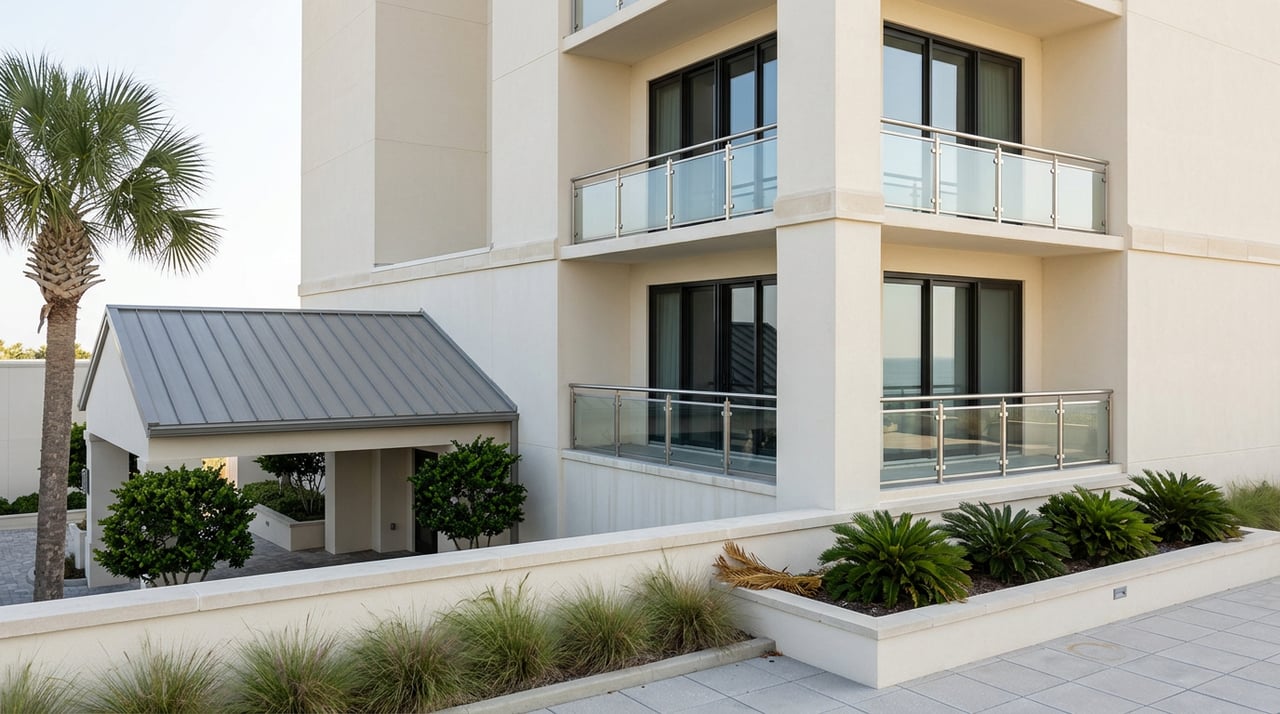
The hotel around it isn't new construction. Sage Hospitality Group announced the rename and repositioning of the former One Ocean Resort & Spa back in September 2024, and the 193-room property, sitting on roughly three acres between Atlantic Boulevard and Ahern Street, reopened under the Dune House name on March 3 of this year. Coastal Farmer followed four months later as the anchor restaurant.
What makes the kitchen worth noting for people who already live here isn't the renovation, it's the supplier list. The restaurant sources from a named rotation of regional farms and boats: Congaree & Penn, Black Hog Farm, Down to Earth Farm, County Line Produce, and Berry Good Farms for produce and proteins, plus Safe Harbor Seafood and Mayport C&C Fisheries for what actually comes off local boats. Mayport shrimp shows up twice on the menu, once as a lunchtime taco and once as a chilled cocktail.
"We're cooking with what the coast gives us, from what the farmers grow to what the boats bring in."
That's executive chef Daniel Tederous, quoted in the restaurant's opening release. He runs the kitchen alongside chef de cuisine Nicolas Kes. Breakfast runs 7 to 11 a.m. daily, lunch 11 a.m. to 3 p.m., dinner 5 to 10 p.m., with happy hour 3 to 6 p.m. on weekdays and the bar staying open until midnight Friday and Saturday. Small plates land between $14 and $46, and reservations go through OpenTable.
The Centennial Season Is Closing Out In A 48-Hour Window
A few blocks south, at 381 Beach Boulevard in Jacksonville Beach, the Beaches Museum has spent 2026 marking Atlantic Beach's actual hundredth birthday. The exhibit, called Atlantic Beach 100, opened April 17 and has been paired with a running series of evening talks that got more specific as the year went on.
On July 16, local historian Johnny Woodhouse walked a room through where the town's street and park names actually came from, Ahern Street included, the same block Dune House now sits on. On August 6, art historian Keri Watson covered Florida's visual history from John James Audubon to the Florida Highwaymen. Both talks are already behind us, but the calendar's closing stretch is still ahead, and it's tighter than most people realize.
- August 23: Atlantic Beach 100 closes for good.
- August 25, 6 p.m.: The Right Whale Closing Reception and Film Screening wraps a second, separate exhibit on North Atlantic right whales, built with Defenders of Wildlife and the Amelia Island Right Whale Ambassadors, which has been running alongside the centennial show since mid-May.
Two different exhibits, both tied to Atlantic Beach's centennial year, closing within 48 hours of each other. The museum's permanent galleries have been free to visit since a donation from Maxwell and Edna Dickinson years ago, and the evening talks ask a suggested $5 from non-members. Details and registration are on the museum's event listings.
The Marsh End Doesn't Have A Wine List
Head the other direction and you land at Dutton Island Preserve, at 793 Dutton Island Road West, past where Mayport Road runs out. It's officially the city's largest park, and the City of Atlantic Beach's own numbers put it at 9,000 feet of marked nature trail on the island itself, a fishing and viewing pier, a canoe and kayak launch, picnic pavilions, and primitive camping. The Timucuan Parks Foundation counts closer to three miles of trail once you add the connecting Dutton Island Expansion Park next door, which the City of Jacksonville manages as a separate but adjoining preserve.
Camping is five sites, permit only, and you need to be 21 with ID to reserve one. Dogs are welcome on a leash. One detail that catches out-of-towners off guard and locals learn fast: the city keeps a running King Tide chart specifically for this park, because the access road and a few campsites sit low enough to flood during a spring tide. It's worth a look at the city's own Dutton Island page before you load the kayak.
| Coastal Farmer / Dune House | Dutton Island Preserve | |
|---|---|---|
| Location | 1 Ocean Blvd, oceanfront | 793 Dutton Island Rd W, Intracoastal side |
| Cost to visit | $14–$46 small plates | Free |
| What's new this month | Opened July 3, 2026 | Nothing new, and that's the point |
| Reservations | OpenTable | Permit required only for camping |
Why The Split Matters
None of this is a competition between two versions of Atlantic Beach. It's what the town is actually built from. The eastern edge sits on the Atlantic, and this month it got a repositioned hotel and a steakhouse with a supplier list long enough to double as a farm map. The western edge sits on the Intracoastal, and this month it's exactly what it was last year, a free trail system where the biggest planning concern is checking a tide chart. In between, a museum is spending its hundredth-anniversary summer walking residents through the street names, the mayors, and even the whales that made the town what it is, with the whole season closing out in a single late-August week.
Most towns this size pick a personality. Atlantic Beach has kept both ends of its own waterline long enough that a resident can eat a $46 seafood tower and paddle a free marsh launch in the same afternoon, without ever leaving the city limits.
If you're already living here and want a local's read on how the town keeps changing corner by corner, Stephen Williams and the Edgewater Home Team keep close track of both ends of Atlantic Beach. Schedule a consultation any time you want to talk through what's next for this stretch of coastline.