By Stephen Williams
One of the most common questions I hear from buyers who are new to Jacksonville Beach is how to decorate a home that feels right for the environment without leaning too hard into the beach theme. It is a fair question. There is a real difference between a home that reflects coastal living and one that looks like a souvenir shop. The good news is that Jacksonville Beach's combination of salt air, abundant natural light, and a relaxed pace of life makes it an excellent canvas for several distinct interior design approaches — and the right one depends on how you actually want to live in the space.
Key Takeaways
-
Modern coastal is the most popular interior design style in Jacksonville Beach, using light palettes, natural textures, and clean lines to evoke calm without relying on nautical clichés.
-
Tropical and indoor-outdoor design styles suit Northeast Florida's warm climate and the area's emphasis on year-round outdoor living.
-
Durability is a practical consideration for any Jacksonville Beach home — salt air, humidity, and active beach lifestyles call for materials that hold up over time.
-
The interior design choices you make before listing a home significantly influence buyer perception and sale price.
Modern Coastal: The Most Requested Style in Northeast Florida
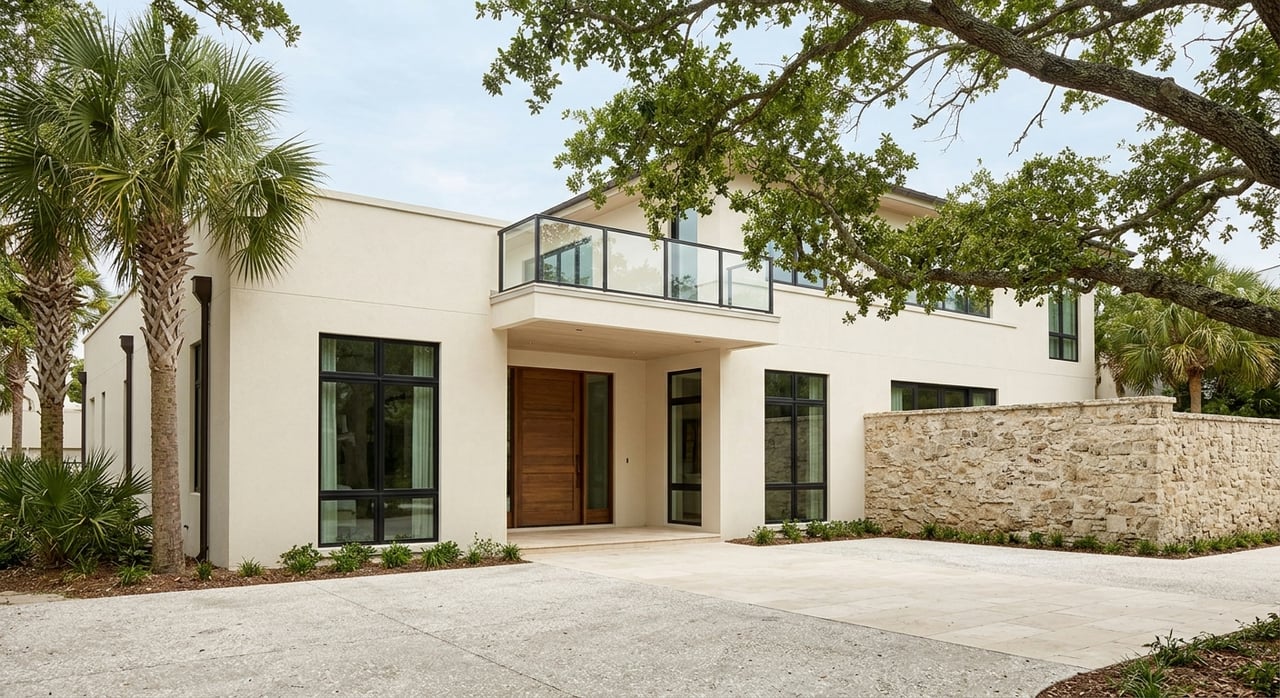
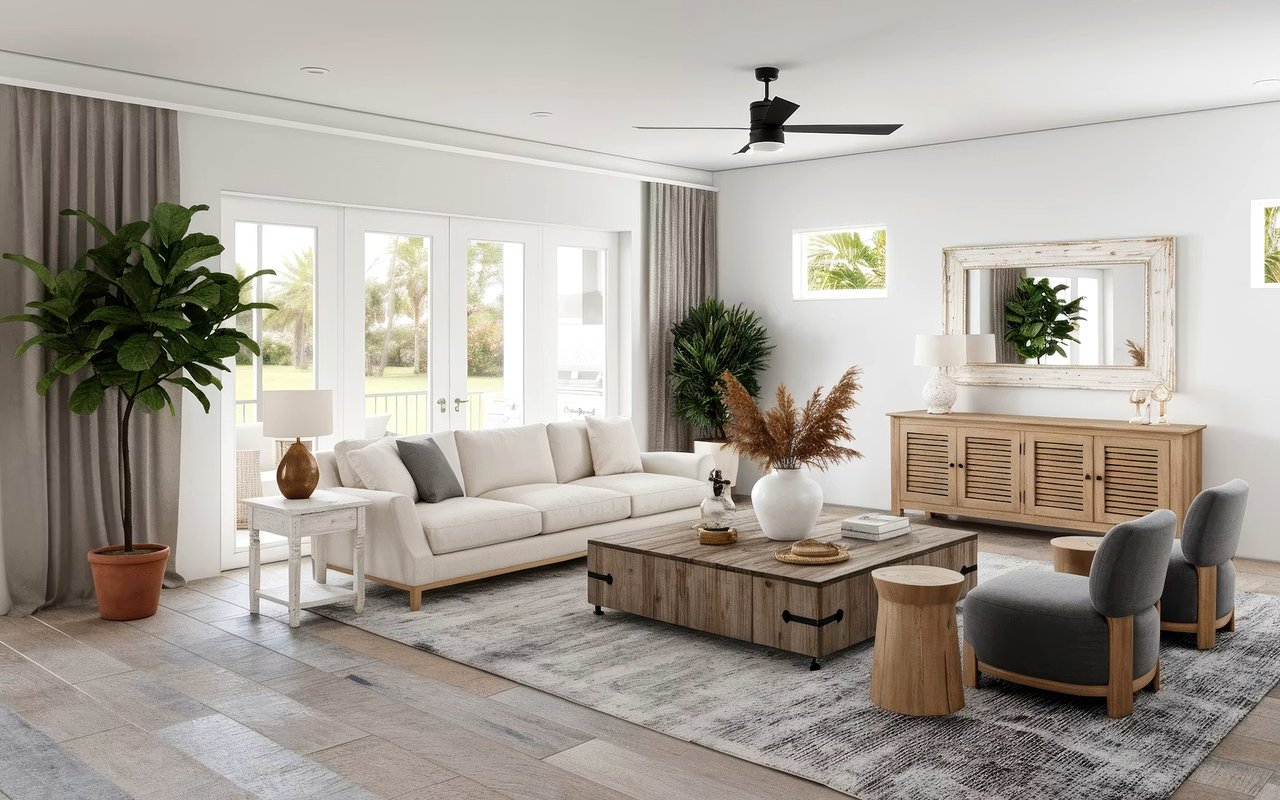
Modern coastal is the design style I see most consistently in Jacksonville Beach homes, and for good reason. It captures the essence of beach living without depending on anchor motifs or rope lighting to make the point. The approach relies on a light, neutral palette — soft whites, warm greiges, and sandy tones — layered with natural textures like linen, rattan, and weathered wood. Clean-lined furniture keeps the space from feeling cluttered, and large windows that connect the interior to the view do more design work than any accessory can.
The biggest mistake in modern coastal design is overdoing it. When every element announces its beach credentials — shells in bowls, driftwood on every surface, shiplap on every wall — the cumulative effect feels forced rather than relaxed. The goal is a home that feels like vacation every day, not one that looks like a rental property's Pinterest board.
The biggest mistake in modern coastal design is overdoing it. When every element announces its beach credentials — shells in bowls, driftwood on every surface, shiplap on every wall — the cumulative effect feels forced rather than relaxed. The goal is a home that feels like vacation every day, not one that looks like a rental property's Pinterest board.
Modern coastal design essentials:
-
Soft, light neutrals on walls and large upholstered pieces
-
Natural fiber rugs, linen throws, and rattan or woven accent chairs
-
Wide-plank hardwood or large-format porcelain tile that handles sandy feet gracefully
-
Minimal window treatments that maximize light and views
-
A few thoughtfully chosen organic accents — sea glass, coral, driftwood — rather than a collection
Tropical and Indoor-Outdoor Living
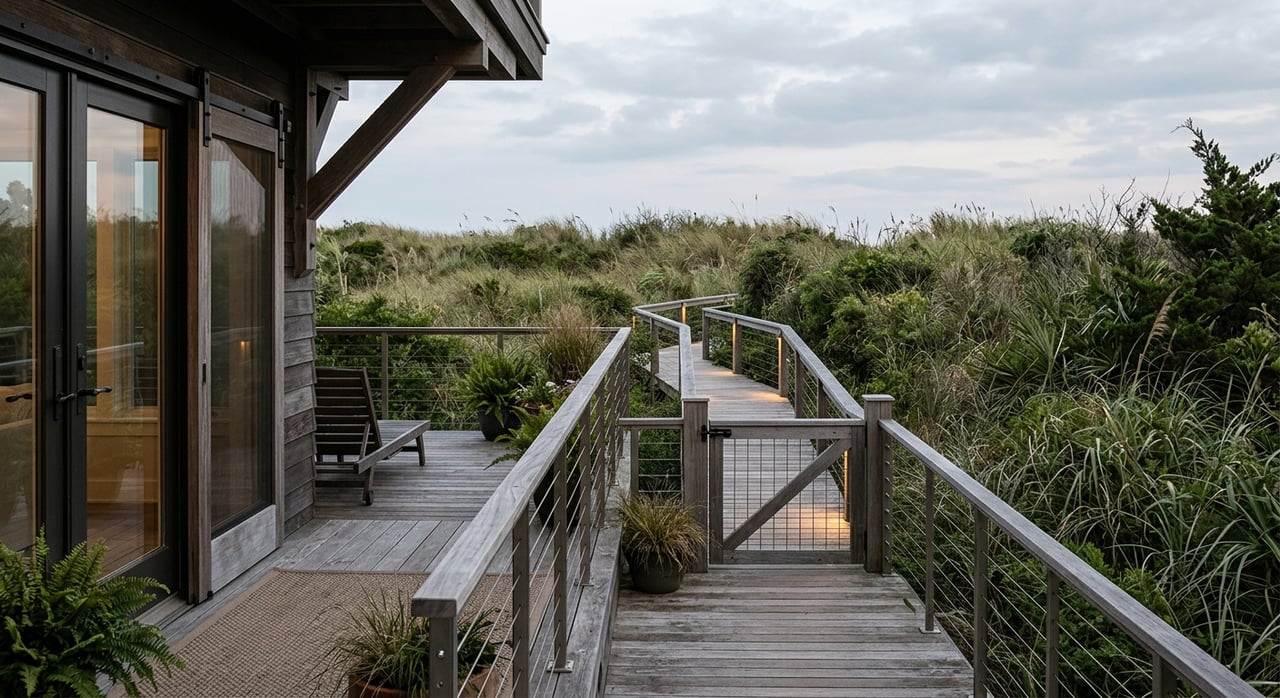
Northeast Florida's climate is one of the most compelling arguments for a tropical or indoor-outdoor design approach. When temperatures allow outdoor living for most of the year, the line between interior and exterior space becomes one of the most important design decisions in the house. Homes that blur that boundary — through large sliding glass doors, covered lanais furnished as additional living rooms, and interior palettes that extend naturally into the outdoor space — tend to feel significantly larger and more livable than their square footage suggests.
Tropical interiors lean into the region's lush vegetation with bold greens, rattan furniture, palm-inspired textiles, and materials like teak and bamboo that feel native to the climate. This style works particularly well in Jacksonville Beach homes with mature landscaping or direct views of natural surroundings.
Tropical interiors lean into the region's lush vegetation with bold greens, rattan furniture, palm-inspired textiles, and materials like teak and bamboo that feel native to the climate. This style works particularly well in Jacksonville Beach homes with mature landscaping or direct views of natural surroundings.
Coastal Traditional: For Buyers Who Want Warmth and Formality
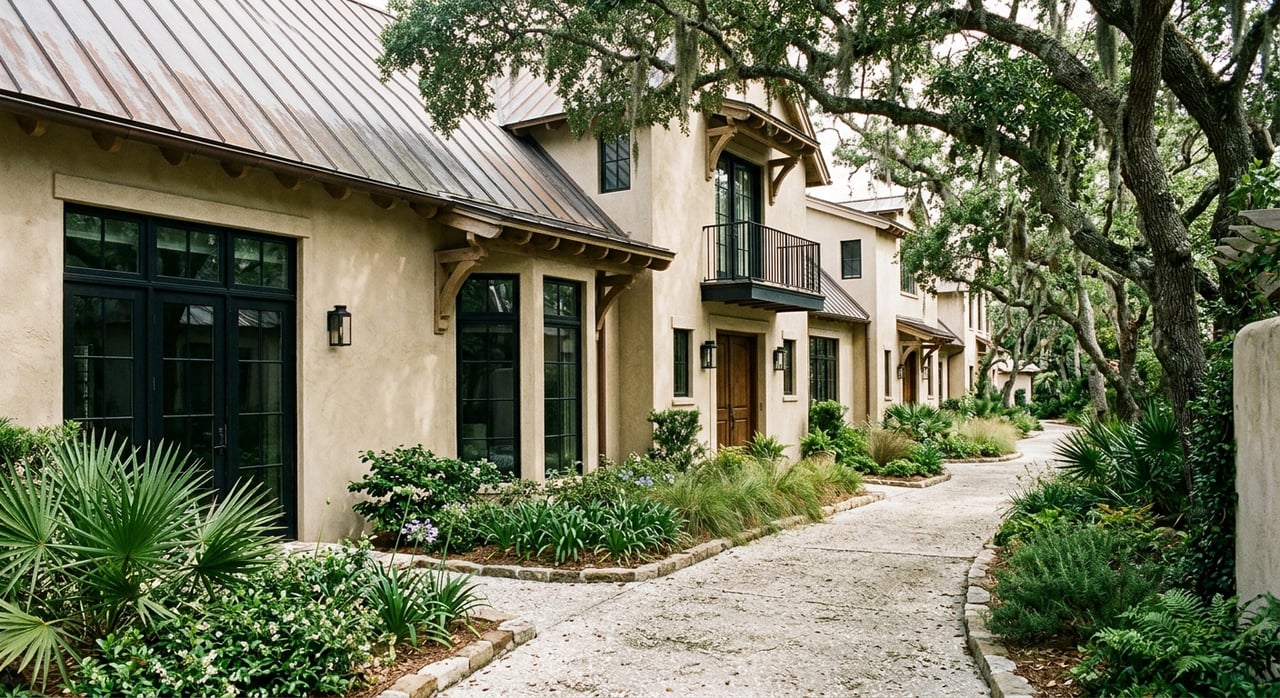
Not every Jacksonville Beach buyer wants a casual, barefoot aesthetic. Some buyers — particularly those relocating from the Northeast or Midwest — want the comfort and craftsmanship of a traditional interior that happens to sit two blocks from the ocean. Coastal traditional mixes classic furniture silhouettes, crown molding, and layered textiles with a color palette drawn from the sea: navy, soft blue, crisp white, and warm sand.
This approach works especially well in the area's larger single-family homes and Ponte Vedra properties, where the architecture and scale support a more formal presentation. It also photographs exceptionally well for listings.
This approach works especially well in the area's larger single-family homes and Ponte Vedra properties, where the architecture and scale support a more formal presentation. It also photographs exceptionally well for listings.
Durability Comes First in a Beach Home
Whatever style you choose, material selection in a Jacksonville Beach home has to account for the environment. Salt air accelerates corrosion on metal fixtures. Humidity affects wood furniture and flooring differently than it does inland. Active beach lifestyles — wet feet, sandy gear, dogs — demand surfaces that can be cleaned easily and hold up to real use.
Materials that perform well in Jacksonville Beach homes:
-
Porcelain and ceramic tile for high-traffic areas and bathrooms
-
Teak, eucalyptus, or powder-coated aluminum for outdoor furniture
-
Performance fabrics on upholstered pieces — Sunbrella and similar outdoor-rated textiles work beautifully indoors in coastal homes
-
Solid or engineered hardwood with a matte finish rather than high-gloss, which shows every grain of sand
-
Stainless steel, brushed nickel, or matte black hardware that resists salt air corrosion better than polished finishes
Frequently Asked Questions
Does the interior design style affect my home's resale value in Jacksonville Beach?
Yes, meaningfully. Buyers in this market respond strongly to homes that feel purposefully designed for coastal living. A home with a cohesive, well-executed modern coastal or indoor-outdoor aesthetic consistently generates stronger buyer interest than one with a generic or disjointed interior. When I prepare sellers for the market, the interior presentation is one of the first things we discuss.
Should I hire a local interior designer for a Jacksonville Beach home?
For significant projects — new construction, full renovations, or preparing a higher-priced home for sale — a designer with specific experience in coastal Florida interiors adds real value. Firms like Sea and Oak Design in Ponte Vedra Beach and Studio M specialize in the kind of coastal work that suits this market well.
What is the most common interior design mistake in Jacksonville Beach homes?
Over-theming. A home that commits completely to a nautical aesthetic — anchors, rope accents, porthole mirrors — tends to feel like a rental unit rather than a home. Buyers want to picture their own life in the space, and an interior that reads as a coastal theme park makes that harder, not easier.
Buy or Sell Your Jacksonville Beach Home With Stephen Williams
I have spent more than 40 years working in Northeast Florida real estate, and I understand how the right presentation — inside and out — shapes the way buyers respond to a property. Whether you are preparing your home for the market or searching for a property with the bones to create something special, I am here to help.
Reach out to me to learn more about how I work with buyers and sellers in Jacksonville Beach.
Reach out to me to learn more about how I work with buyers and sellers in Jacksonville Beach.