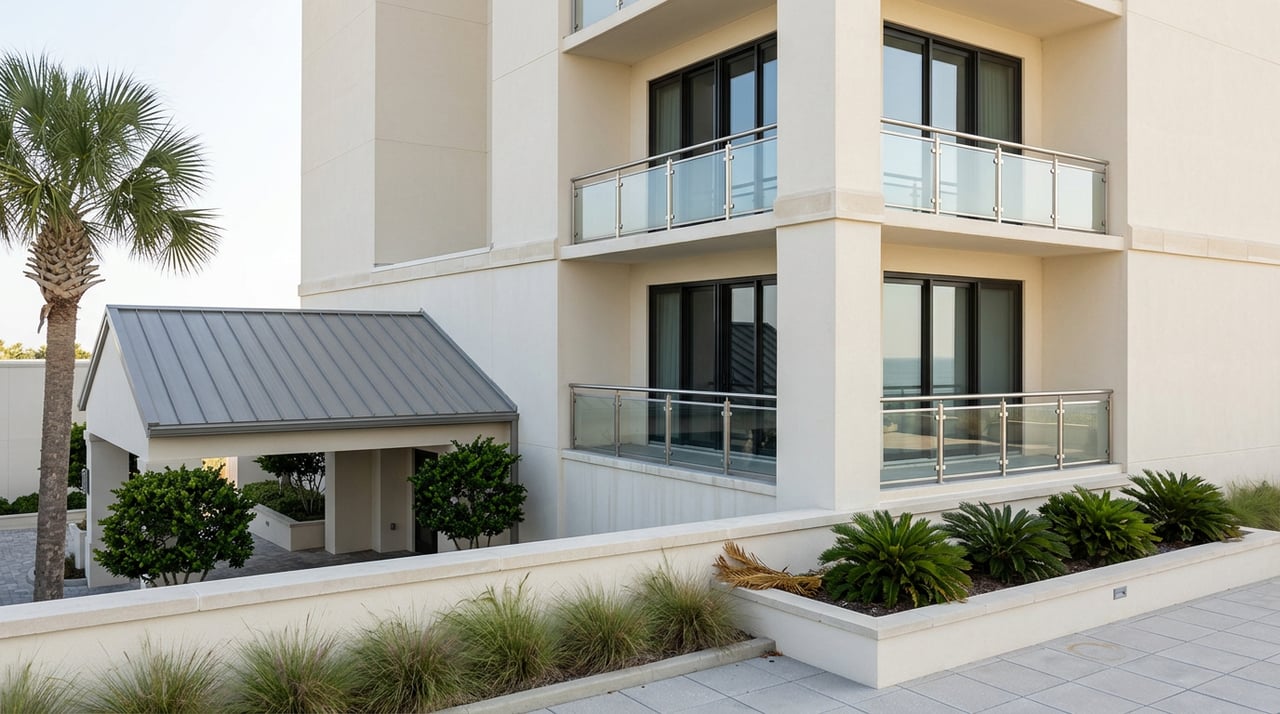
Walk two open houses on the same afternoon in Jacksonville Beach and you can end up comparing a condo built the year the Bee Gees topped the charts to one built the year the first iPod shipped. Same price range, same view of the Atlantic, same walk to the pier. What you won't see on the listing sheet is that both buildings are now running against the same kind of deadline, just at different points on the clock.
The city's own building department has stated plainly that every building within city limits sits within three miles of the Atlantic Ocean's coastline, which means the 25-year trigger applies here. That trigger matters when you start lining up build years against calendar years, and realize a tower built in 2001 is not the safe, worry-free option a buyer might expect it to be.
The Coastal Clock Nobody Mentions at the Open House
The distinction matters because building age drives a legal requirement, not just a design aesthetic. Florida's Structural Integrity Reserve Study and milestone inspection laws, passed after the 2021 Champlain Towers South collapse in Surfside, use age and coastal proximity to determine inspection timing. In Jacksonville Beach, because the whole city qualifies as coastal under the ordinance, it starts at 25.
That means a building most people would call "newer" isn't automatically further from its first mandatory inspection than a building most people would call "old." It just depends on where 25 years lands on the calendar.
The Row, By Decade
Jacksonville Beach's oceanfront and near-ocean condo stock spans more than three decades, and the buildings fall into distinct age tiers depending on when they were built relative to the state's 2022 rollout of these requirements.
| Building | Built | Age in 2026 | Milestone Status |
|---|---|---|---|
| Vista Del Mar | 1970-71 | 55 | Already past its first mandatory inspection deadline under GoverningDocs' schedule |
| Ocean 14 | 1976 | 50 | Already past its first mandatory inspection deadline |
| Acquilus | 1976 | 50 | Already past its first mandatory inspection deadline |
| Oceania | 2001 | 25 | Hits its first mandatory deadline by December 31, 2026 |
| The Landmark | 2002 | 24 | Faces its first deadline in 2027 |
| Costa Verano | 2006 | 20 | Years away from its first trigger |
Under that same tiered schedule, any building that had already crossed its 25-year mark before July 1, 2022 was on the hook for its first inspection by December 31, 2024. That covers the classic oceanfront row, buildings like Vista Del Mar and Ocean 14, both built before Florida had any statewide milestone requirement at all. What's easy to miss is that Oceania, a 12-story tower completed in 2001, turns 25 this year and faces its own first-ever milestone inspection deadline by the end of 2026. It isn't grandfathered in just because it's newer than its 1970s neighbors down the block. It's simply on a later section of the same clock.
What Already Happened at the Older Towers
The concrete-and-rebar reality of an aging oceanfront building isn't hypothetical here. As News4JAX reported, Ocean 14, a 17-story tower on the waterfront, had already been mid-renovation for years by the time Surfside made national news in 2021. Its condo board director said his mind went straight to the parallels between the two buildings, since Ocean 14 and Champlain Towers South were built in roughly the same era with similar concrete and rebar construction methods. The board had crews stripping deteriorated concrete and replacing corroded rebar with a mix rated roughly ten times harder than what was originally poured, all while a certified engineer inspected the work in progress.
That project predates the state's mandatory milestone law. It shows what salt air and five decades do to a concrete high-rise regardless of legislation, and it's a useful reminder that a building's real condition often shows up in permit history and board minutes long before any statute forces the issue.
Why 2026 Is the Year the Newer Buildings Start Answering the Same Questions
Two changes converged this year that matter more for the newer tier of buildings than most buyers realize. First, the vote associations used to take to waive structural reserves no longer works. Associations were required to start funding their SIRS reserves in line with the study as of January 1, 2026, according to Florida's condo-inspection guidance. Second, the Structural Integrity Reserve Study itself is triggered by building height, not age, so even a condo finished this year needs one on file, as The HOA Guide's Florida condo-law overview explains. Age determines when the physical inspection happens. Height determines when the financial planning document is required.
Put those together and a buyer touring Oceania this fall is asking the same category of question a buyer touring Ocean 14 would ask: has the inspection happened, what did it find, and is the reserve fund actually funded to the level the study recommends. The building's age changes the urgency, not whether the question needs to be asked at all.
What to Ask Before You Write an Offer
For any condo in Jacksonville Beach three stories or taller, regardless of when it was built, there's a short list worth working through before you get past the inspection period:
Has the milestone inspection been completed, and was it Phase 1 only or did it move to Phase 2? A Phase 2 finding means the association has 365 days to begin repairs once the report is received, and that timeline usually shows up in board minutes before it shows up in a special assessment notice.
What does the current Structural Integrity Reserve Study say the reserve fund should hold, and how does that compare to what's actually in the account?
Is the association funding its reserves at the full SIRS-recommended level now that structural reserve waivers are no longer allowed, effective January 1, 2026?
Since January 2026, associations with 25 or more units are required to post governing documents, budgets, and reserve studies where owners, and prospective buyers, can access them, according to SavingAdvice. If a building hasn't made those available, that's worth asking about directly.
These aren't questions that show up on a standard listing sheet, which is exactly why they belong in the offer conversation rather than after closing. We coordinate with our title and inspection partners early in a transaction specifically so these documents get requested and reviewed while there's still time to negotiate, not after the ink is dry.
If You're Selling in an Older Tower
If your building falls into the older tier, the buyers touring your unit have likely already read a version of this story somewhere else this year. Having your milestone inspection report, current SIRS, and recent board minutes organized and ready to hand over on day one of showings signals that the association is ahead of the requirement rather than scrambling to catch up. It's a small thing that changes the tone of a negotiation.
A Few Questions Worth Answering Directly
Does the 25-year rule only apply to oceanfront towers, or does it reach buildings closer to the Intracoastal side of town? Since the city's determination covers every building within its limits as within three miles of the coastline, the 25-year trigger applies citywide, not just to the buildings facing the water directly.
If a building already passed its milestone inspection with no findings, does that mean no special assessment risk going forward? Not necessarily. The inspection addresses current structural soundness. The separate reserve funding requirement, now mandatory as of January 1, 2026 for the eight structural components covered under a SIRS, addresses whether enough money is being saved for future replacement. A clean inspection and an underfunded reserve account can exist at the same building at the same time.
Does any of this affect financing on a newer building too? It can. Since the SIRS requirement is tied to building height rather than age, lenders working through condo project reviews increasingly ask about SIRS and milestone status across the board, not only for buildings old enough to have already triggered a physical inspection.
Jacksonville Beach's condo market rewards buyers and sellers who understand that the calendar year on the building's certificate of occupancy tells you less than the calendar year relative to 25. If you're weighing a purchase along the oceanfront row, or thinking through how to position a listing in an older tower, Stephen Williams and the Edgewater Home Team can walk through the specific building's inspection and reserve status with you before you're under contract. Schedule a consultation and we'll go through it together.
This article is general information, not legal, tax or financial advice. Consult a qualified professional about your situation.